The Left Main Coronary Artery (LMCA) supplies blood to nearly two-thirds of the heart muscle. Significant narrowing or blockage of this artery is a high-risk, life-threatening condition. With advances in stents, imaging, and techniques, LMCA stenting (Left Main PCI) has become a safe and effective alternative to bypass surgery in selected patients.

LMCA stenting restores blood flow in one of the most critical coronary arteries using advanced, imaging-guided angioplasty techniques.

When Is LMCA Stenting Needed?
LMCA disease may present with:
- Severe or unstable angina
- Acute coronary syndrome or heart attack
- Breathlessness or heart failure
- High surgical risk or patient preference to avoid bypass surgery
LMCA lesions may involve:
- Ostium (origin)
- Shaft
- Distal bifurcation (LAD–LCX)
How LMCA Stenting Is Performed
LMCA angioplasty is a high-risk, precision procedure performed in advanced cardiac cath labs.
Key Steps
- Coronary angiography to define anatomy
- IVUS/OCT imaging to assess vessel size and plaque
- Balloon angioplasty ± plaque modification (IVL or rotablation if calcified)
- Drug-eluting stent placement
- Optimization using Proximal Optimization Technique (POT)
- Final kissing balloon inflation if bifurcation involved
Procedure time: 1–2 hours
Hospital stay: 1–3 days
Stenting Strategies for LMCA
- Provisional single-stent strategy (preferred)
-
Two-stent techniques for complex distal LMCA:
DK-Crush (preferred for true bifurcation)
Culotte
T/TAP stenting
DK-Crush technique has shown superior outcomes in complex distal LMCA disease.
Role of IVUS / OCT (Strongly Recommended)
- Accurate vessel sizing
- Optimal stent expansion
- Reduced restenosis and stent thrombosis
- Improved long-term survival
Benefits of LMCA Stenting
- Minimally invasive alternative to bypass surgery
- Faster recovery and shorter hospital stay
- Excellent symptom relief
- Comparable outcomes to CABG in selected patients
Safety & Outcomes
- High procedural success in experienced centers
- Long-term outcomes comparable to surgery for low-to-intermediate SYNTAX score
- Requires experienced operators and heart-team approach
Post-Procedure Care
- Dual antiplatelet therapy (DAPT)
- Strict control of blood pressure, diabetes, and cholesterol
- Lifestyle modification and cardiac rehabilitation
- Regular follow-up with imaging if required
Indian Context
- High prevalence of diabetes, calcified disease, and complex CAD
- LMCA stenting increasingly performed in tertiary cardiac centers
- IVUS-guided LMCA PCI is now standard practice in many Indian hospitals
Key Takeaways
- LMCA disease is serious but treatable with modern PCI
- Careful patient selection and imaging guidance are critical
- Provisional stenting preferred; two-stent strategies for complex disease
- Comparable outcomes to bypass surgery in selected cases
LMCA stenting is recommended in patients with significant left main disease presenting with angina, acute coronary syndrome, heart failure, or those with high surgical risk for bypass surgery.
IVUS or OCT imaging is strongly recommended to accurately assess vessel size, plaque burden, stent expansion, and optimize long-term outcomes.
A provisional single-stent strategy is preferred. In complex distal bifurcation disease, two-stent techniques such as DK-Crush, Culotte, or T/TAP may be used.
LMCA stenting offers a minimally invasive alternative to bypass surgery, faster recovery, shorter hospital stay, excellent symptom relief, and comparable outcomes in selected patients.
In experienced centers, LMCA PCI has high procedural success with long-term outcomes comparable to bypass surgery in patients with low-to-intermediate SYNTAX scores.
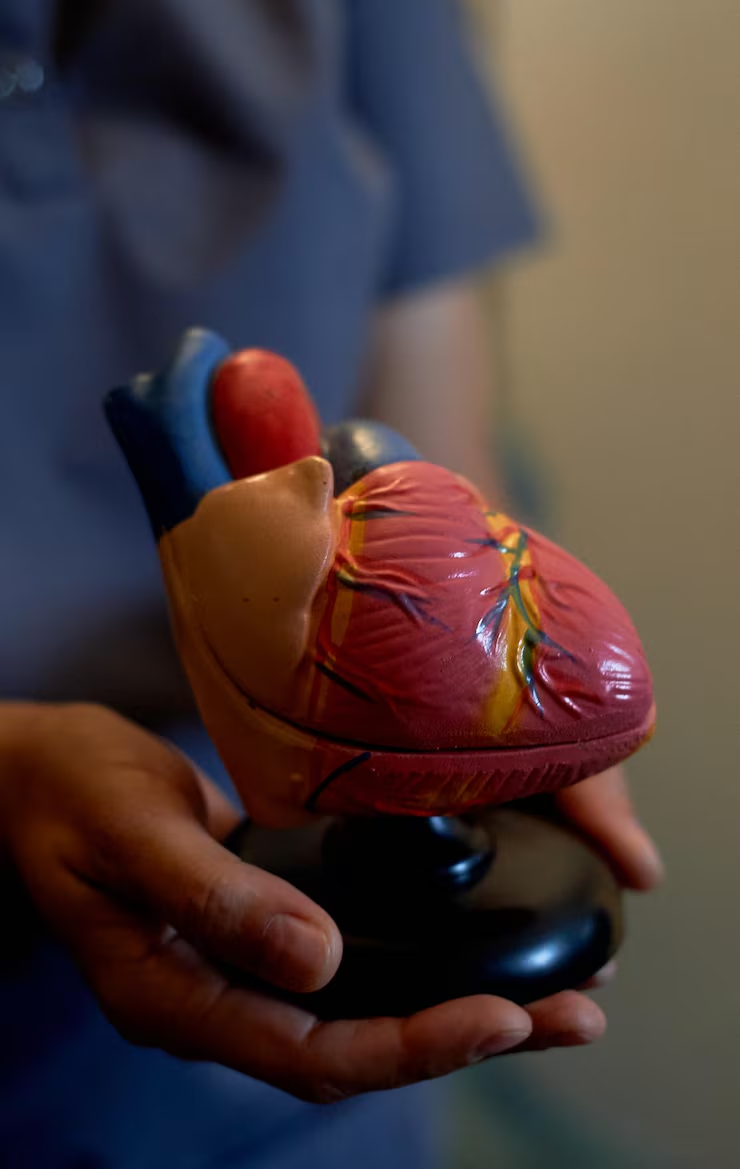


Expert LMCA Stenting Program
Advanced LMCA PCI using IVUS/OCT-guided techniques, complex bifurcation strategies, and modern drug-eluting stents to ensure safety, durability, and excellent long-term outcomes.